

Ugaoo Organic Vermicompost for Plants 5 Kg
Boost your garden's health with Ugaoo's organic vermicompost—nature's best fertilizer!
₹259
by UGAOO
Check on AmazonSwitch · Medium effort
In a landfill, buried without air, your peels rot into methane. In a bucket on your balcony, the same peels become khaad.
180 members shared · 1 adopted
Skip the shopping. Any 15–20 litre paint bucket, drum or clay matka with a lid will do — most homes have one lying about, so your start costs ₹0. Drill or hammer 8–10 small holes in the sides and a few in the base for airflow, and stand it on a tray to catch drips. Keep it on the balcony, in a stairwell corner, or near the washing area. A terracotta khamba is a lovely upgrade — the clay breathes and it looks good — but buy one only after a month, once you know the habit sticks.
Before the first peel goes in, lay a hand-deep base of dry material — dry leaves swept from the compound, torn newspaper, shredded cardboard, or coco peat from a nursery. This layer soaks up moisture, keeps air moving at the bottom, and is the single biggest smell-preventer. Stockpile a bag of dry leaves beside the bin: you will need a handful every day, and hunting for dry material after the bin has already gone soggy is how most people give up.
Collect the day's peels, vegetable scraps, squeezed chai patti, fruit skins and crushed eggshells, chop anything big, and tip the lot in. Then the one rule that decides everything: cover it completely with a handful or two of dry leaves or paper. Wet buried under dry means no smell and no flies; wet left exposed on top is an open invitation to both. Thirty seconds after dinner, and the day's job is done.
Once or twice a week, churn the pile with a stick or an old khurpi so air reaches the middle. Then squeeze a handful: it should feel like a wrung-out towel — damp, not dripping. Too wet or whiffy? Mix in more dry leaves. Bone dry and doing nothing? Sprinkle a little water or add more peels. That squeeze test is the whole science of composting; everything else is patience.
In warm Indian weather the bottom of the bin turns first, in roughly six to eight weeks; winter takes longer. Ready khaad is dark, crumbly and smells like earth after the first rain — you should not be able to recognise a single peel in it. When the bin fills up, stop adding fresh waste and start a second bucket (this is why khambas come as stacked tiers), let the full one rest a couple of weeks, then empty it out. Half-done lumps go straight back in as a starter for the next batch.
Mix a few fistfuls into the soil of your pots, top-dress the tulsi and curry patta, or dig it into any patch of garden. No plants of your own? Someone in your society, the local nursery, or the colony gardener will happily take a bag of home-made khaad — it is the same manure they otherwise pay for. Once your peels start feeding plants you can see, throwing them in the dustbin starts to feel genuinely strange.
| Add | Skip |
|---|---|
| Fruit and vegetable peels, overripe tomatoes | Cooked food with oil, gravy or masala |
| Chai patti (squeezed) and coffee grounds | Dairy, meat, fish and bones |
| Crushed eggshells | Coconut shells — they take years; keep them for kindling |
| Dry leaves, newspaper, plain cardboard | Glossy or foil-coated paper |
| Puja flowers and garden trimmings | Anything plastic — even bags labelled 'compostable' |
| Coco peat, sawdust from untreated wood | Floor sweepings with dust, hair and wrappers mixed in |

আজকে চারা গাছটিতে কেঁচো সার দিলাম। 🌱 গাছের সুস্থ বৃদ্ধি ও মাটির উর্বরতা বাড়াতে
Nirmal mahato · 88 cheers

আজকে চারা গাছটিতে জল দিলাম। 🌱💧 নিয়মিত যত্নেই চারা গাছ একদিন বড় হয়ে উঠবে। 🌳
Nirmal mahato · 82 cheers
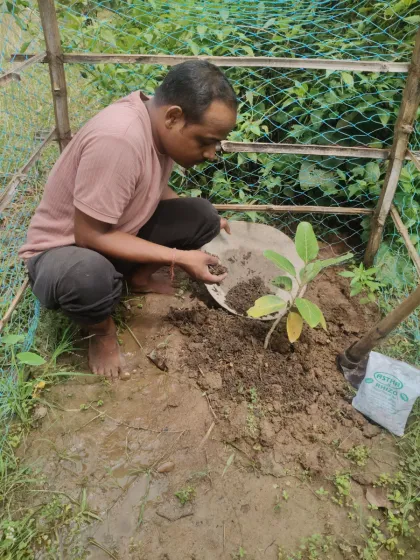
আজকে গাছের স্বাস্থ্য পর্যবেক্ষণ করে গাছের সুস্থ বৃদ্ধি ও মাটির উর্বরতা বজায় রাখ
Nirmal mahato · 80 cheers
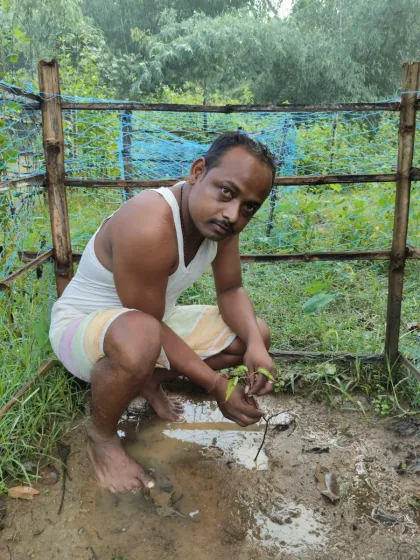
অতিরিক্ত বৃষ্টির কারণে গাছের গোড়ায় জল জমে থাকলে শিকড়ে বাতাসের অভাব হয়ে গাছ দ
Nirmal mahato · 75 cheers

আজকে চারা গাছটির চারপাশের গোড়ার মাটি হালকা করে দিলাম, যাতে মাটিতে বাতাস চলাচল ভ
Nirmal mahato · 74 cheers

প্রচুর বৃষ্টির মাঝেও চারা গাছটির কাছে এসে দেখভাল করলাম। 🌱🌧️ গাছকে বাঁচাতে নিয়
Nirmal mahato · 74 cheers
Sponsored · EcoMitram may earn from these links
Boost your garden's health with Ugaoo's organic vermicompost—nature's best fertilizer!
₹259
by UGAOO
Check on Amazon
Boost your garden's health with our organic vermicompost, turning waste into nutrient-rich soil!
₹269
by IFFCO URBAN GARDENS
Check on Amazon
Boost your garden's health with BLOOMBUDDY's organic vermicompost—nature's best fertilizer!
₹249
by BLOOMBUDDY
Check on Amazon
Choose ECOZ bags for a greener shopping experience—compostable, biodegradable, and plastic-free!
₹459
by ECOZ
Check on AmazonGear is optional — the steps above work without buying anything.
Not if you keep the wet–dry balance. A healthy bin smells faintly of wet earth. A stink means too much wet and too little air — stir well, mix in a few handfuls of dry leaves or shredded paper, and it settles within a day or two. Keeping cooked food and dairy out, and always covering fresh waste with dry material, prevents the problem in the first place.
Fruit flies come for exposed food, so bury every fresh layer under dry leaves and keep the lid on. If maggots appear, don't panic — they are decomposers and the compost is not spoilt — but they usually mean cooked food or excess moisture crept in. Add dry material, give it a stir, and tie a piece of old cotton cloth under the lid so flies cannot sneak in through the air holes.
Yes. A lidded bucket or a stacked khamba works in a kitchen corner, near the washing area, or on a stairwell landing — done right, it has no smell to give itself away. If space is genuinely impossible, ask your society or RWA about a shared compost pit or community khamba; many societies now run one for the whole building, and your job reduces to carrying down a small dabba of segregated wet waste.
Expect your first usable khaad in about six to eight weeks in warm weather, slower through winter. Chopping waste small, keeping the pile damp as a wrung towel, and turning it regularly all speed things up. The first batch always feels slow; after that a mature bin works continuously — waste in at the top, khaad out at the bottom.
As a beginner, no — oil, salt, gravies and dairy slow the pile down and are the fastest route to smells, rats and maggots. Send leftover cooked food to a cow, a street dog, or the society's wet-waste collection instead. Once you have a well-running pile you can experiment with small amounts of plain rice or roti, well buried — but raw peels and dry leaves should stay the staple diet.
A khamba is a stack of terracotta pots made for home composting — you fill the tiers turn by turn, and the breathing clay manages moisture and smell largely by itself. It is a genuinely good tool, but it is an upgrade, not an entry ticket. Start with the ₹0 bucket or matka from the storeroom; if a month in you are still layering daily, the khamba is money well spent.