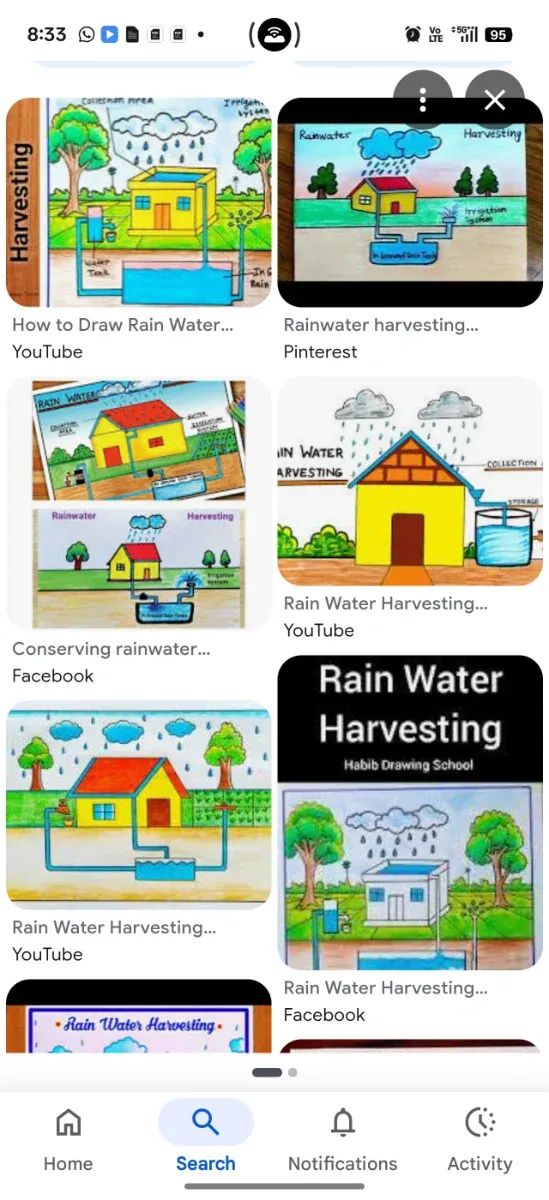

Rainwater harvesting is the collection and storage of rain from surfaces like roofs instead of letting it run away. Key Components of a Rainwater Harvesting System • Catchment Area: The surface that receives the rain, typically a building's sloped roof. • Gutter and Drain Line (Conveyance): Channels and pipes that collect water from the roof and direct it downward. • First Flush / Filter: A device or unit that clears out initial dirt, debris, and pollutants from the first rain spell. • Storage Tank / Cistern: A container that holds the filtered water for future domestic or landscape use. • Recharge Well / Pit: An underground structure that lets excess water seep back into the ground to restore local groundwater levels. How to Draw a Simple Rainwater Harvesting Diagram 1. The House & Clouds: Draw a house with a sloped roof in the center. Add rain clouds and falling droplets directly above the roof. 2. The Catchment & Gutters: Label the sloped roof section as the CATCHMENT AREA. 3. The Pipes: Draw a vertical pipe running down from the roof edge—label this the DRAIN LINE (or conveyance pipe). 4. The Tank & Recharge Pit: Connect the pipe to a cylindrical or rectangular STORAGE TANK underground or on the ground. Add an overflow or extension leading into a stone-lined RECHARGE WELL. 5. Labels & Uses: Draw a small tap near the tank outlet, and label arrows or paths as REUSE (for gardening or cleaning) and Groundwater Recharge. Learn more about system.