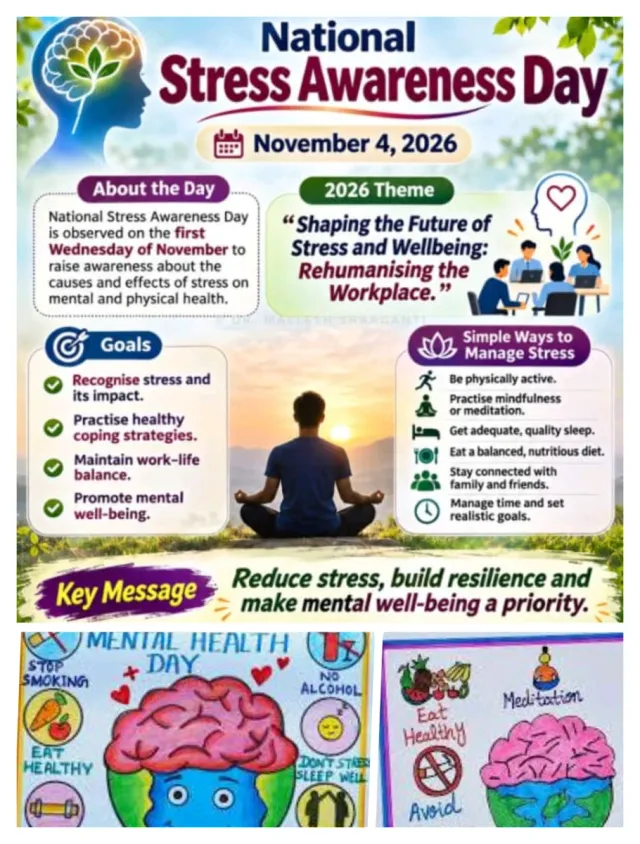

Drawing and creative art-making are scientifically proven tools for lowering stress, reducing cortisol levels, and practicing mindfulness. How Drawing Relieves Stress • Lowers Cortisol: Studies show that just 45 minutes of art-making (such as drawing, marker sketching, or clay work) significantly reduces cortisol (the primary stress hormone). • Encourages Present-Mindedness: Structured or repetitive drawing—like coloring mandalas, creating grid patterns, or doodling—shifts focus away from anxious thoughts and provides a sense of predictability and control. • Externalizes Emotions: Putting thoughts, shapes, or lines onto paper gives abstract internal pressure a physical "home" outside of your head. Simple Stress-Relief Drawing Exercises You do not need to be an artist to use drawing as a coping mechanism. Try these low-barrier techniques: 1. Repetitive Line Doodling: • Draw smooth, gentle, overlapping curved or intersecting lines across a page. • Imagine your racing thoughts flowing down your arm and hand onto the paper. 2. Structured Grids or Mandalas: • Divide a page into small sections (like a grid or quadrants) or use a circular mandala template. • Fill each small section with repetitive ovals, hatching strokes, or floral patterns. The rhythm of small, repeated motions calms the nervous system. 3. Emotion Mapping: • Sketch a quick shape or outline representing how you feel in the moment, and use different colors or line textures to represent different weights or stresses. Stress Awareness & Context • Stress Awareness Dates: Stress Awareness Month is observed every April, and National Stress Awareness Days are marked annually on April 16 and November 6. • Common Triggers: Stress often stems