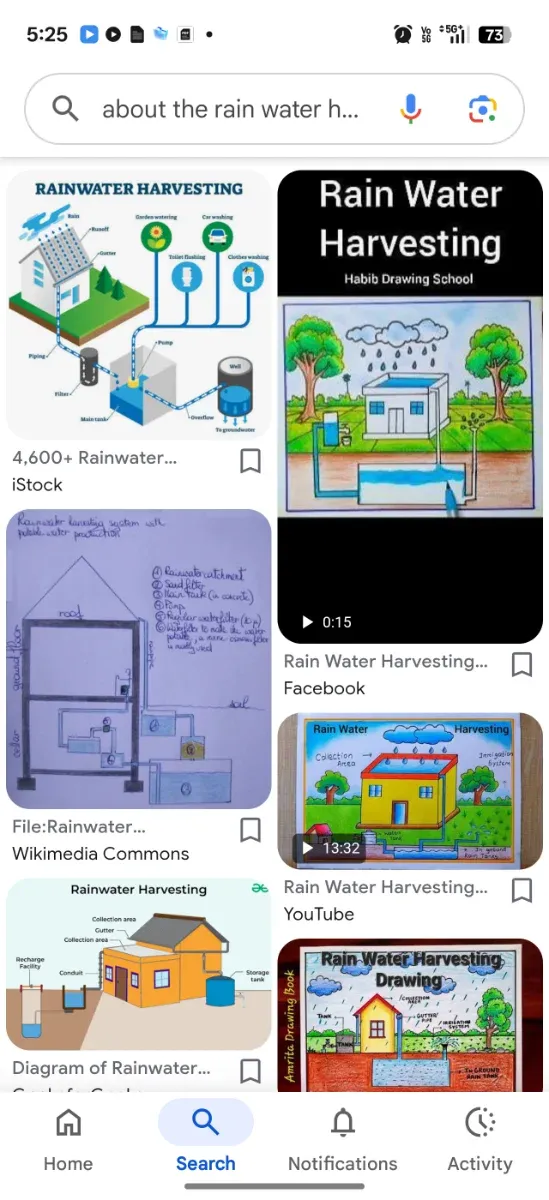

Rainwater harvesting (RWH) collects and stores rainwater from surfaces like roofs before it runs off, helping to save water and recharge groundwater. Key Components of a Rainwater Harvesting System • Catchment Area: The surface where rain falls (usually a house or building roof). • Gutters and Drains: Horizontal channels and vertical pipes that catch and route water from the roof. • Filter: A mesh or gravel/sand unit that cleans leaves, dirt, and debris before the water enters storage. • Storage Tank / Cistern: An above-ground or underground tank that holds the water for direct use (gardening, flushing, or cleaning). • Recharge Well / Pit: A deep pit or borehole that directs excess water back into the underground aquifer to raise the water table. How to Sketch / Draw a Simple RWH Diagram Follow these steps to draw a basic educational diagram: 1. The Background & Sky: Draw clouds and falling rain at the top. 2. The House / Catchment: Draw a house with a sloped or flat roof labeled "CATCHMENT AREA". 3. Gutters & Drain Line: Draw a gutter at the edge of the roof connected to a vertical pipe labeled "DRAIN LINE" (or downspout). 4. Filter & Storage Tank: Route the pipe through a small Filter box into a large "STORAGE TANK" (placed beside or underground next to the house). 5. Recharge / Reuse Output: • Draw a tap near the bottom of the storage tank labeled "REUSE" (for watering plants or domestic chores). • Draw an overflow pipe going into a Recharge Pit/Well filled with gravel and sand to show water seeping into the ground to recharge groundwater. 6. Labels and Color: Label each part clearly (blue for water, green for trees/tanks, brown for pipes). Main Benefits • Lowers water bills and municipal water demand. • Recharges depleted groundwater levels and prevents well dry-ups. • Reduces soil erosion, urban flooding, and storm runoff. For visual references and step-by-step drawing demonstrations, you can watch the Rain Water Conservation.