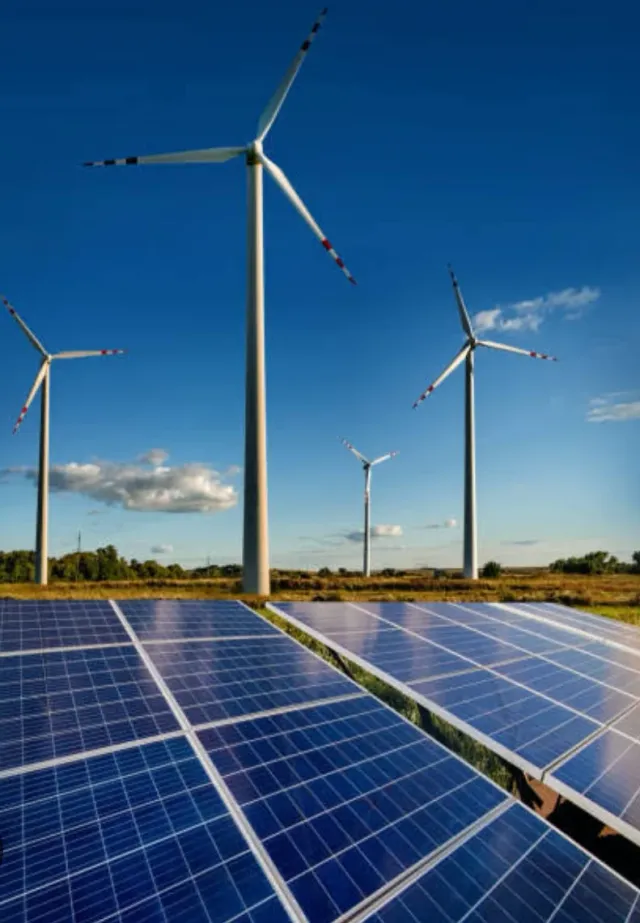

🌍 WIND AND SOLAR ENERGY: POWERING A GREENER FUTURE Harnessing Nature for a Sustainable Tomorrow Energy is the backbone of modern civilisation. From lighting our homes and powering our schools to running industries and transportation systems, energy plays a vital role in our daily lives. However, our excessive dependence on fossil fuels such as coal, petroleum, and natural gas has contributed to air pollution, global warming, and climate change. To protect our planet and ensure a sustainable future, we must embrace clean and renewable sources of energy. Among these, wind and solar energy stand out as two of the most promising solutions. ☀️ Solar Energy: The Power of the Sun Solar energy is the radiant energy we receive from the Sun. Through solar panels, sunlight can be converted into electricity to power homes, schools, hospitals, agricultural pumps, and industries. Solar energy is abundant, renewable, and environmentally friendly. Rooftop solar panels can reduce dependence on conventional electricity, while solar streetlights and solar water heaters help save energy and resources. In rural areas, solar-powered systems can improve access to electricity and support farmers in their agricultural activities. The Sun provides us with an extraordinary natural resource every day. By harnessing its power wisely, we can transform sunlight into a source of sustainable development. 🌬️ Wind Energy: Turning Wind into Electricity Wind energy is generated by harnessing the natural movement of air. Wind turbines convert the kinetic energy of wind into electricity. Wind farms are established in suitable locations where wind speeds are favourable, including coastal areas, open plains, and elevated regions. Wind power produces electricity without burning fossil fuels during operation. It helps reduce greenhouse gas emissions, conserves water compared with conventional thermal power generation, and supports the transition towards a cleaner energy system. Wind energy also creates employment opportunities in manufacturing, installation, operation, and maintenance, contributing to economic growth and sustainable livelihoods. 🌱 Environmental Benefits of Wind and Solar Energy Wind and solar energy offer several important environmental benefits: 1. Reduction in Air Pollution: They help reduce emissions associated with burning fossil fuels. 2. Combating Climate Change: They support efforts to reduce greenhouse gas emissions and global warming. 3. Conservation of Natural Resources: They reduce dependence on finite resources such as coal, oil, and natural gas. 4. Water Conservation: Wind and solar photovoltaic systems generally require much less water during electricity generation than conventional thermal power plants. 5. Protection of Human Health: Cleaner electricity can help reduce pollution-related health risks. 6. Sustainable Development: Renewable energy helps meet present energy needs while protecting the interests of future generations. 🇮🇳 Wind and Solar Energy in India India has enormous potential to harness both solar and wind energy. With abundant sunshine across much of the country and favourable wind resources in several regions, renewable energy can play a major role in the nation's development. Initiatives such as the National Solar Mission and the PM Surya Ghar: Muft Bijli Yojana encourage the adoption of solar energy. Rooftop solar installations can help households generate clean electricity, while large-scale solar parks and wind farms contribute to the country's renewable energy capacity. In Telangana, promoting rooftop solar systems in schools, government offices, and residential buildings can help reduce conventional electricity consumption. Solar-powered streetlights, energy-efficient appliances, and environmental awareness programmes can further strengthen local sustainability efforts. ⚡ Challenges and the Way Forward Although wind and solar energy have enormous potential, certain challenges must be addressed. Solar power generation depends on sunlight, while wind power depends on wind availability. Energy storage systems, improved electricity grids, and careful planning are therefore essential to ensure a reliable power supply. The manufacturing and disposal of solar panels and wind turbine components must also be managed responsibly. Environmental assessments and proper recycling practices can help minimise their ecological impact. Governments, educational institutions, industries, and citizens must work together to accelerate the transition towards renewable energy. Schools can organise renewable energy awareness campaigns, conduct energy audits, establish rooftop solar systems where feasible, and encourage students to become ambassadors of sustainable living. 🌏 The Role of Students and Citizens Every individual can contribute to a cleaner energy future. We can switch off unnecessary lights, use energy-efficient appliances, support renewable energy initiatives, GOUSIATGNGC,O/o DEOJANGAON TELANGANA