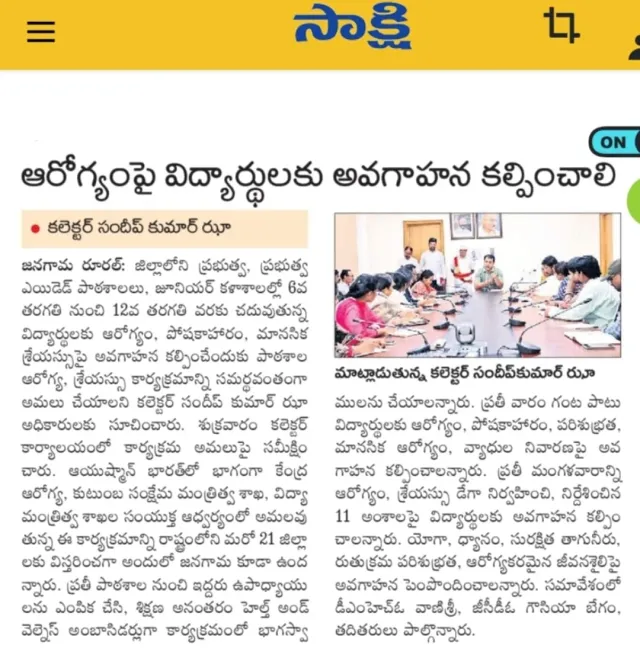

HEALTH, HYGIENE AND NUTRITION: THE THREE PILLARS OF A HEALTHY SCHOOL “A healthy child is a happy learner, and a healthy school is the foundation of a healthy society.” A Vision for Healthier Schools and Brighter Futures Health, hygiene, and nutrition are three closely interconnected elements that play a vital role in the overall development of every child. Our Honourable District Collector has clearly emphasised their importance by explaining how these three essential components form a triangle, each supporting and strengthening the other. This valuable guidance highlights the need for every school to understand, adopt, and promote these principles as an integral part of everyday school life. Education should not be limited to textbooks and examinations; it must also empower children to lead healthy, hygienic, responsible, and fulfilling lives. The Triangle of Health, Hygiene and Nutrition Just as a triangle depends on all three sides for its structure, a child's well-being depends on the balanced integration of health, hygiene, and nutrition. If one component is neglected, the effectiveness of the other two may also be affected. 1. HEALTH — The Foundation of Well-being Good health enables children to participate actively in classroom learning, sports, creative activities, and social interactions. Physical fitness, emotional well-being, adequate sleep, regular exercise, and timely medical attention are essential for the holistic development of students. Schools should promote physical activity, monitor students' health, encourage emotional well-being, and ensure timely identification and referral of health concerns. A healthy child is more likely to concentrate, learn effectively, and develop confidence. 2. HYGIENE — The Shield Against Disease Personal and environmental hygiene are essential for preventing infections and maintaining a safe learning environment. Simple habits such as washing hands with soap, maintaining clean nails, wearing clean clothes, using safe toilets, drinking safe water, and keeping classrooms and school surroundings clean can make a significant difference. Schools must ensure that toilets are clean and functional, handwashing facilities are available, drinking water is safe, and waste is disposed of properly. Menstrual hygiene education and access to appropriate facilities are particularly important for adolescent girls. Hygiene is not merely a practice to be followed during special campaigns; it must become a daily habit and a shared responsibility. 3. NUTRITION — The Fuel for Growth and Learning Nutrition provides the energy and essential nutrients required for physical growth, brain development, immunity, and academic performance. A balanced diet containing cereals, pulses, vegetables, fruits, and other locally available nutritious foods helps children grow and develop appropriately. Schools should promote healthy eating habits, discourage excessive consumption of foods high in salt, sugar, and unhealthy fats, and encourage students to understand the value of balanced nutrition. Proper implementation and monitoring of school meal programmes, along with nutrition awareness among students and parents, can contribute significantly to children's health and learning outcomes. Why Must Every School Act? The three sides of this triangle are inseparable in practice. A nutritious meal alone cannot compensate for unsafe drinking water or poor sanitation. Clean surroundings alone cannot meet a child's nutritional needs. Similarly, medical care becomes more effective when supported by good hygiene and healthy eating habits. For example, a child who consumes nutritious food but repeatedly suffers from infections due to poor hygiene may experience interruptions in learning. Likewise, a child who maintains personal cleanliness but does not receive adequate nutrition may struggle with energy levels and concentration. Therefore, every school must adopt a coordinated approach that integrates all three dimensions. From Awareness to Action: The Responsibility of Every School In accordance with the vision articulated by the Honourable District Collector, every school should translate these principles into practical, measurable actions. - Health. - Hygiene. - Nutrition. - Student Participation. - Community Involvement. - Continuous Monitoring. The objective should not be limited to conducting awareness programmes or maintaining records. The real measure of success is the positive change visible in students' daily habits, health, attendance, confidence, and overall development. Healthy Schools, Better Learning, Brighter Futures Health, hygiene, and nutrition are not separate administrative responsibilities; they are complementary investments in the future of our children. When students are healthy, they can learn better. When schools maintain proper hygiene, children are protected from preventable illnesses. When students receive adequate nutrition, they are better equipped to grow, participate.Gousia