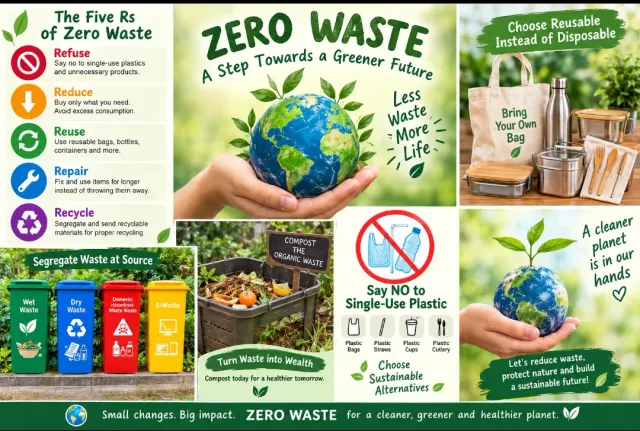

ZERO WASTE – A STEP TOWARDS A GREENER FUTURE “The greatest threat to our planet is the belief that someone else will save it.” Zero Waste is not just an environmental concept; it is a way of life that encourages us to protect our planet by reducing waste, reusing materials, and recycling resources. In a world where pollution, plastic waste, and excessive consumption are increasing rapidly, adopting a Zero Waste lifestyle has become more important than ever. Every small step towards reducing waste can make a significant difference to the environment. What Is Zero Waste? Zero Waste is an approach that aims to prevent waste generation and ensure that resources are used wisely rather than discarded. It encourages people to rethink their consumption habits, refuse unnecessary products, reduce waste, reuse materials, repair damaged items, and recycle wherever possible. The goal is to minimise the amount of waste sent to landfills and incinerators while conserving natural resources and protecting ecosystems. Why Is Zero Waste Important? Improper waste disposal contaminates soil and water, pollutes the air, harms wildlife, and contributes to climate change. Plastic waste, in particular, threatens aquatic life and takes a long time to break down. Food waste is another serious concern. When food is thrown away, the water, energy, land, and labour used to produce it are also wasted. A Zero Waste approach helps conserve natural resources, reduce pollution, save energy, protect biodiversity, and create a cleaner and healthier environment for present and future generations. The Five Rs of Zero Waste The Five Rs provide a simple framework for achieving a Zero Waste lifestyle: 1. Refuse: Say no to unnecessary products, single-use plastics, and excessive packaging. 2. Reduce: Buy only what you need and avoid unnecessary consumption. 3. Reuse: Carry reusable bags, water bottles, lunch boxes, and containers instead of disposable alternatives. 4. Repair: Fix damaged clothes, furniture, electronic devices, and other useful items instead of throwing them away. 5. Recycle: Segregate recyclable materials such as paper, glass, metal, and suitable plastics and send them for proper recycling. By following these principles, we can significantly reduce the amount of waste we generate every day. Zero Waste at Home and in Schools A Zero Waste lifestyle begins at home and extends to schools, offices, and communities. Families can segregate waste into wet, dry, and domestic hazardous waste according to local guidelines. Kitchen waste can be converted into compost, while reusable products can replace disposable items. Schools can play a vital role by encouraging students to carry reusable water bottles and lunch boxes, avoid plastic covers, use both sides of paper, maintain clean campuses, and participate in composting and recycling activities. Eco-Clubs and National Green Corps (NGC) units can organise awareness rallies, waste audits, cleanliness drives, poster competitions, and campaigns against single-use plastics. Students can become environmental ambassadors and inspire their families and communities to adopt sustainable practices. The Role of Every Citizen Zero Waste is not the responsibility of governments alone. Every individual has a role to play. Shopkeepers can reduce unnecessary packaging, households can prevent food waste, institutions can introduce waste segregation, and local authorities can strengthen collection and recycling systems. We must remember that cleanliness does not mean merely sweeping waste away from our surroundings. True cleanliness begins when we prevent waste from being generated and ensure that the waste we produce is managed responsibly. A clean street is important, but a community that generates less waste is even better. Towards a Sustainable Future The journey towards Zero Waste requires awareness, discipline, cooperation, and consistent action. We may not achieve absolutely zero waste overnight, but we can move closer to this goal through responsible choices and collective commitment. Instead of asking, “Who will clean up this waste?” we must begin asking, “How can we prevent this waste from being created?” Let us choose reusable products over disposable ones, compost organic waste, segregate waste at source, protect our natural resources, and encourage others to follow sustainable practices. Conclusion Zero Waste is not about producing no waste overnight; it is about making conscious choices to waste less every day. Our planet does not need a few people practising sustainability perfectly; it needs millions of people making sustainable choices consistently. Let us transform our homes, schools, offices, and communities into Zero Waste spaces. Every bottle reused, every meal saved, every item repaired, and every piece of waste properly segregated is a step towards a healthier planet. “Refuse what you don't need, reduce what you consume, reuse what you can, repair what you value.Gousia Jangaon